AI Policy
Last Updated 15 May 2026
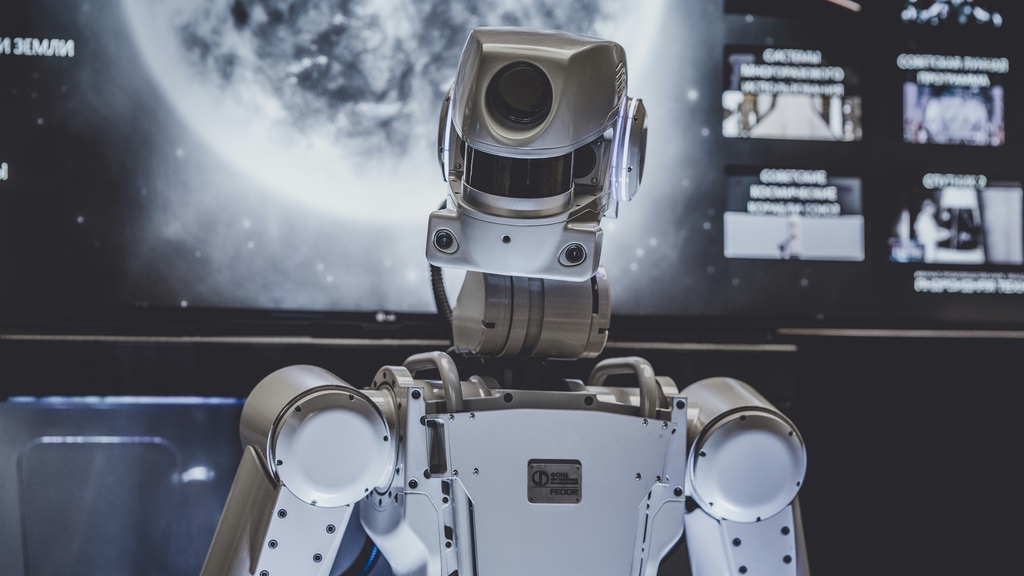 Photo by Arseny Togulev on Unsplash
In the carefree days of 2022, my stance on using AI was simple:
"I don't use AI in commercial endeavors." Me, in the carefree days of 2022.
But AI is now so tightly integrated into the tools and workflows that creatives use, it is nearly impossible for us to make a blanket claim of “I don't use AI”. 1
Meanwhile, the attitudes of consumers, creatives, and industry executives regarding the appropriate use of AI in creative work have evolved into a vast spectrum of differing views.
So here is a slightly more nuanced version of my AI policy, as of May 2026:
-
All the words you read in my books have been written, typed, or dictated into a voice recorder by me. The voice recording software probably uses AI to turn my voice into text.
-
All plots, story ideas, settings, characters, and other story elements are also of my own invention. I do not use AI for brainstorming, because my brain already has plenty of storms.
-
Developmental edits are primarily courtesy of my wife, along with other beta readers.
-
I use software tools (mainly Microsoft Word and Claude) for an initial copyedit and proofreading pass before handing manuscripts off to professional human editors. After I get the final edits back I do one more proofreading pass with software before sending them off to print. 2
-
All of my covers are designed by real humans who have been asked to avoid the use of AI.
-
Marketing is a mix of AI tools and my own blundering efforts, except for newsletters and blog posts, which I treat like all other writing.
Further Thoughts
You might think that as both a scientist and science fiction writer, I'd be all in on AI. The reality is that being a scientist and science fiction writer makes me all too aware of the dangers it poses.
I'm not talking about the "AI is going to become sentient and kill us all in our sleep" kinds of dangers, but the "scientific research consistently shows that AI is making people dumber, less creative, less connected, and less human" kinds of dangers.
As Brandon Sanderson said recently:
I think this is why I rebel against AI art products so much: because they steal the opportunity for growth from us. Brandon Sanderson, The Hidden Cost of AI Art
I should note that other creatives have looked at the same state of affairs in our new AI-laden world and have come to very different conclusions.
If you survey the writing community on the "proper" use of AI in writing, you'll find that indie authors and organizations have largely taken a different view of proper AI usage compared to their traditionally published counterparts.3 This is likely because indie authors have to pay for production costs out of pocket, while traditionally published authors are provided with these services for free.
It's true that anyone can publish a book for free thanks to our modern era of print-on-demand services and ebook readers. But when you combine the costs of professional editors, cover designers, audiobook narration, translation, and marketing, producing a high-quality product people are willing to pay you for can easily cost thousands of dollars per book.
So this policy is just a summary of how I've decided when to use or avoid AI in my own creative endeavors. It isn't meant to be some kind of rallying cry or treatise on proper AI-usage.
I don’t consider it my place to tell someone who is trying to pay their rent with their writing business that they are “doing it wrong” and should either spend more on human-centered production costs or give up on their dreams and go get a job at Costco.
A Special Note on Book Covers
Authors tend to differ the most in their opinions on the use of AI in the creation of book covers. The common argument in favor of AI-generated covers is that the “art” an author sells is their written prose. Everything else—the cover, the typesetting, the audiobook voices, the social media images—is just marketing.
As mentioned above, all my covers are designed by me or professional cover designers. Part of the reason for that is because I have a daughter who makes a living selling art, and I doubt I could look her in the eye at Thanksgiving dinner if I started putting AI-generated art on my covers.
I'm also fortunate to have the means to afford human-created cover art. I know many indie authors who do not have that luxury, and they are still welcome to Thanksgiving dinner.
That said, many major cover designers are starting to use AI in their work. Of the five professional cover designers I reached out to about a recent project, three had disclaimers stating they had started using AI-generated art in their workflows.
These aren't people trying to jump onto the AI art bandwagon to push human artists out of the market. They are talented artists who have been creating covers for years (decades in some cases), have had their work used to create the AI systems that now threaten their livelihood, and are simply doing their best to survive in the shifting economic landscape.
Additionally, stock image libraries are being flooded with AI-generated content that reviewers are having an increasingly difficult time identifying. So they mainly rely on individual submitters to properly disclose image origins. As a result, many cover designers are already using AI-generated art without realizing it.
When I commission a cover designer, I look for one who has been around long enough to have developed skills outside of the era of generative AI, then I tell them I don’t want AI-generated content used in my covers. At that point I trust them to do the right thing.
Further Reading
If you aren't yet tired of "AI in art" discussions, these essays and videos on the topic are worth a look:
-
This essay by Damonza explaining why a team of artists who have been designing book covers for over a decade decided to start incorporating AI-generated art into their workflow.
-
It's interesting to compare the AI guidelines published by The Alliance of Independent Authors with those of The Authors Guild, as the latter is mostly compromised of traditionally published authors.
-
Even certain versions of Microsoft Word have started to use AI in their grammar checkers. ↩
-
Even the more sophisticated AI tools rarely catch all of the errors and typos, which is one of the reasons why it's still so important to use professional human editors. ↩
-
See for example the policies of: The Alliance of Independent Authors, The Authors Guild, The Society of Children's Book Writers and Illustrators, and The Science Fiction and Fantasy Writers Association, to name a few. ↩